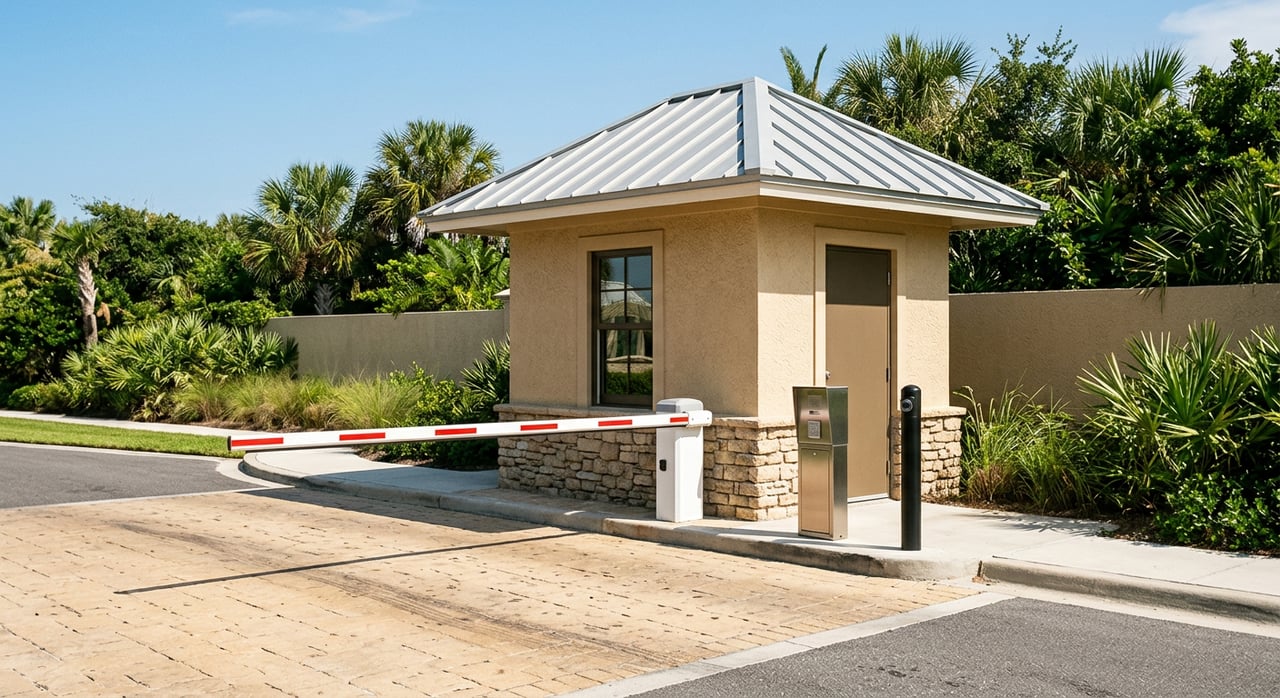
Love the idea of a secure neighborhood with resort-style amenities but not sure how to buy inside the gates? You are not alone. Buying in an Estero gated community has a few extra steps, but once you know the playbook, the process is straightforward. In this guide, you will learn each step from pre-approval to move-in, how to time your contingencies around the association’s estoppel, and what to check in the HOA documents so you can close with confidence. Let’s dive in.
How buying in Estero gated communities works
Gated communities layer association rules, dues, and occasionally club memberships on top of a standard home purchase. That means a successful contract relies on clear contingencies, early document requests, and a careful read of fees and budgets. Your goal is simple: confirm the home, the community, and the ongoing costs all fit your needs and budget before your contingencies expire.
Step 1: Get pre-approved and build your shortlist
Get a full lender pre-approval before touring seriously. If you are considering a condo or attached villa, ask your lender what documents they will need from the association. Some lenders require project-level reviews for condos.
Then shortlist gated communities that match your lifestyle and budget. For example, you can review the public materials for Pelican Sound Golf & River Club to understand how a mature Estero community presents amenities and membership details. Start by browsing the official site for Pelican Sound Golf & River Club.
Tips for a strong shortlist
- Ask for recent HOA budgets, rules, and a summary of amenities up front.
- Note whether amenities are included in dues or run as a separate club with initiation or transfer fees.
- Confirm whether there is a Community Development District (CDD), which would add a separate assessment to your annual property tax bill.
Step 2: Write a smart offer with protective contingencies
When you make an offer, include core protections:
- Financing and appraisal contingency.
- General inspection contingency.
- HOA and document-review contingency that gives you enough time to receive and review everything.
- Title and survey contingency to verify road ownership and easements.
- Flood-insurance affordability or elevation-certificate review when relevant.
As soon as the contract is signed, instruct the seller or title company to order the estoppel certificate. Under Florida law, associations must deliver an estoppel within 10 business days of a proper request, and the estoppel’s figures are effective for 30 days when sent electronically or by hand delivery, and 35 days if mailed. Plan your timeline around this statutory window. See the statute on estoppel delivery and fees.
Step 3: Order and read the estoppel certificate
The estoppel is a payoff statement from the association that lists all money due for the property. Review it carefully the day it arrives. Verify:
- Regular assessments and due dates.
- Outstanding balances, fines, or violations.
- Any special assessments, capital contributions, transfer or application fees.
- Whether buyer approval or a right of first refusal applies.
- Whether any CDD amounts appear in the accounting summary.
- The effective period of the estoppel, so closing falls inside that window.
If the estoppel reveals new or higher fees than expected, you can often renegotiate or, if allowed by your contingency, cancel within the review period.
Step 4: Review the HOA or condo documents
Request the full association package immediately after acceptance. Key documents include:
- Declaration (CC&Rs), Bylaws, Articles of Incorporation, and all amendments.
- Current operating budget and the most recent financial statements.
- Reserve study and current reserve balances.
- Board and membership meeting minutes for the last 12 months.
- Insurance certificate and policy summary for the master policy, including wind or hurricane coverage and deductibles.
- Vendor contracts for gates and security.
- Litigation disclosures and any recent large insurance claims.
Pay special attention to insurance and reserves. Florida condominium law requires association property insurance to cover replacement cost as determined by an independent appraisal at least once every 36 months, and it sets rules for what the master policy must and must not cover. Large percentage deductibles for named storms can lead to owner assessments if a loss occurs. Review the statutory guidance on association insurance in Section 718.111.
Red flags to watch
- Large or recurring special assessments, or board minutes hinting at upcoming ones.
- Low or waived reserves, especially for structural components.
- Frequent or significant litigation involving the association.
- Very large master-policy deductibles without a clear plan for funding them.
- Gate or security contracts that lack backup power or a tested emergency access plan.
Step 5: Inspect the property and confirm permits and flood zone
Schedule standard inspections: home, roof, pest or termite, pool or spa, and septic if applicable. Ask your agent to confirm permit history for recent work with Lee County.
Next, confirm the FEMA flood zone and request your lender’s flood determination. Lee County participates in ongoing FEMA Risk MAP updates, with new map panels phased in. Always check the county’s guidance on FEMA map changes for Lee County and consider getting sample flood insurance quotes early. This helps you budget and decide if you need an elevation certificate.
Step 6: Clear title, roads, and easements
Your title search should confirm whether streets are public or private and identify any easements for access, drainage, or utilities that affect the home. In some master-planned communities, features that appear public are private common elements. Ask your closing agent to verify whether any developer rights remain in place that could affect future changes within the community.
Step 7: Gates, security, and emergency access
Gated entries operate differently from community to community. Ask for a written summary of procedures for residents, guests, vendors, and deliveries. Clarify whether the gate is staffed 24/7, partially staffed, or purely automated with keypad or phone app access.
Emergency access matters. Many Florida municipalities and fire departments recommend or require approved emergency entry systems such as Knox boxes or key switches. Confirm what is installed at the community and whether backup power is in place and tested. For context, see a municipal example that explains approved emergency access devices for gates. Your association should have a clear plan coordinated with local fire and rescue.
Before closing, verify how remotes, fobs, transponders, and app access will transfer and whether deposits or fees apply.
Step 8: Amenities and memberships
Not all amenities are included in HOA dues. Some communities operate golf, beach, or club facilities as separate memberships with initiation and annual fees. Others offer bundled memberships that transfer automatically with the home. Ask for:
- A list of amenities included in dues versus separate memberships.
- Any initiation, transfer, or capital contribution fees.
- Waitlists, guest policies, or usage rules that may affect your plans.
Step 9: Understand ongoing costs, including CDD assessments
Build a full picture of your monthly and annual costs:
- HOA or condo dues and how they vary by home type.
- Any current or pending special assessments.
- Insurance implications from the master policy, including deductibles and what owners must insure.
- CDD assessments if applicable. Community Development Districts are separate special-purpose units of government. Their non-ad valorem assessments for infrastructure and operations are disclosed in sales documents and typically appear on your annual property tax bill. Learn how CDDs work under Chapter 190, Florida Statutes.
When you read the budget, pay attention to large vendor contracts like gate staffing or private security. These can be multi-year obligations that affect dues.
Step 10: Prepare to close smoothly
As closing approaches, confirm all association steps are complete:
- Application and buyer-approval process, including interview or orientation if required.
- Association transfer forms and any move-in or elevator reservations for condos.
- Final payoff figures and prorations based on the estoppel so your closing statement is accurate.
- Title insurance and final lender conditions.
Day one after closing
- Pick up and test gate remotes, fobs, or transponders. Enroll in any resident app or call system.
- Register vehicles and set up guest lists with the gatehouse if applicable.
- Review community rules for vendors, deliveries, and rentals so your plans align.
- Note the timing of any CDD or HOA payments that will come due soon after move-in.
Align your timeline with the estoppel window
The estoppel’s timing can be the bottleneck. Florida law gives associations 10 business days to deliver an estoppel after a proper request, and the figures are effective for a limited period. Coordinate with your agent and title company to:
- Request the estoppel the day your contract is accepted.
- Set a document-review contingency that comfortably covers delivery and review time.
- Target closing inside the estoppel’s effective window or plan for an updated estoppel if needed. Review the statutory timing in Section 720.30851.
Quick checklist for buyers
- Get pre-approved by a lender familiar with Florida condos and HOAs.
- Ask the listing side to order the estoppel and the full association package upon contract acceptance.
- Review the estoppel for assessments, transfer fees, fines, and approval requirements.
- Read the budget, reserve study, minutes, insurance summary, and gate/security contracts.
- Verify the FEMA flood zone and check county guidance on mapping updates. Get quotes early.
- Confirm gate device transfer, deposits, and any membership rules or waitlists.
- Build a contingency period that matches estoppel and document timing.
Ready for local guidance?
If gated living in Estero is on your list, you deserve a calm, well-run process and local insight at each step. From shortlisting communities to negotiating the right contingencies and reading the association package, you will benefit from a partner who knows the details that matter. For one-on-one help tailored to your goals, connect with Nicole Costa.
FAQs
What is an estoppel certificate in a Florida HOA purchase?
- It is the association’s official payoff statement showing all money due for a property; by statute it must be delivered within 10 business days of a proper request and is effective for a limited period.
How do CDD assessments work in Estero gated communities?
- CDD assessments are separate non-ad valorem charges for infrastructure and operations that usually appear on your annual property tax bill and are in addition to HOA dues.
What should you check about a community’s insurance and reserves in Florida?
- Confirm the master policy coverage, wind or hurricane deductibles, and reserve funding; Florida law requires an independent replacement-cost appraisal for association property at least every 36 months.
How do you verify flood insurance needs for an Estero home?
- Check the property’s FEMA panel, review Lee County guidance on map updates, request your lender’s flood determination, and get early quotes to confirm affordability.
What gate and emergency access questions should you ask before buying?
- Ask how residents and guests access the community, whether there is an approved emergency entry system like a Knox device, and if backup power and testing are in place.