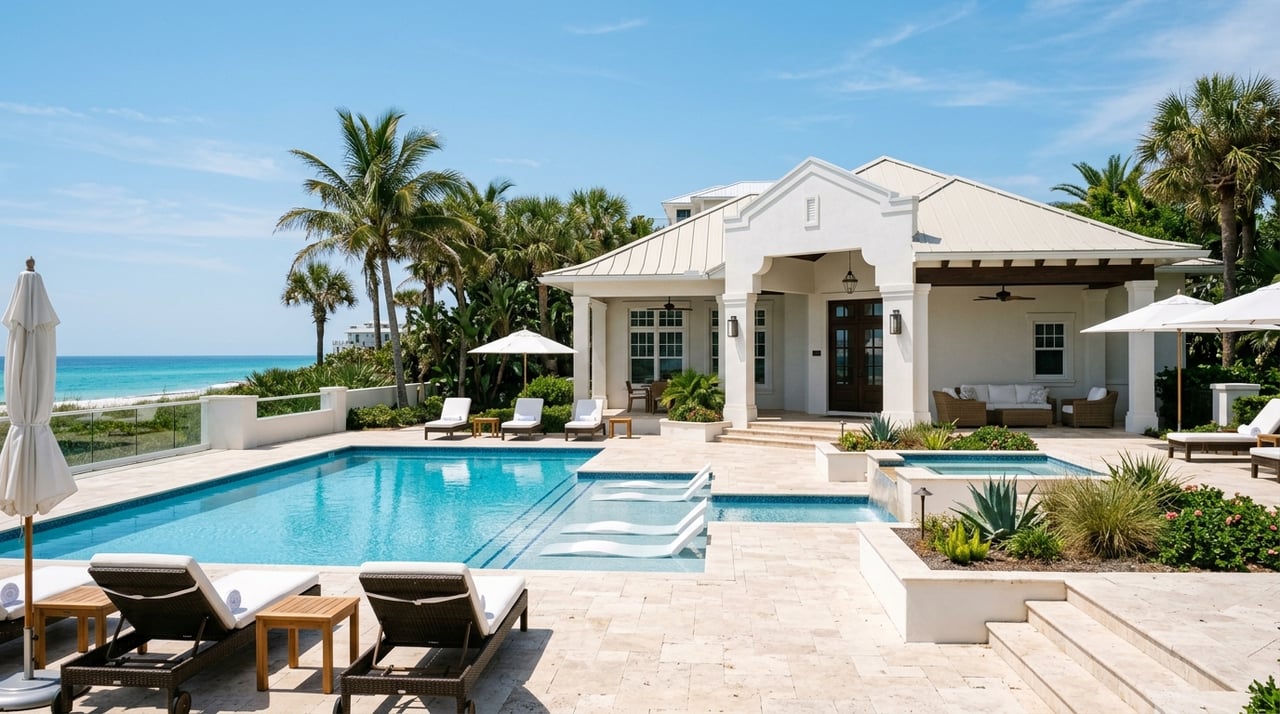
Trying to compare Bonita Springs communities can feel simple at first, until you realize that “HOA and amenities” can mean very different things from one property to the next. You may be weighing a master-planned neighborhood, a beachfront condo, or a home near public recreation and beach access. This guide will help you sort through the fee structures, amenity models, and document details that matter most so you can make a more confident decision. Let’s dive in.
Why HOA details matter in Bonita Springs
In Bonita Springs, buyers often see a mix of master-planned HOA communities, beachfront condominium communities, and homes that rely more on nearby public amenities. Those ownership models are not the same, and the rules, fees, and services can vary in important ways.
Florida law also separates these structures. Mandatory homeowners’ associations are governed under Chapter 720, while condominium associations are governed separately under Chapter 718. For you as a buyer, that means two properties with similar price points can come with very different responsibilities, benefits, and costs.
Another local factor is beach access. In Bonita Springs, beach use may come through a private HOA amenity, a club-linked arrangement, or public beach access with separate parking costs. The City of Bonita Springs lists 10 beach accesses along Bonita Beach, and Lee County currently posts $2-per-hour parking at Bonita Beach Access #1, Bonita Beach Park, and Little Hickory Island Beach Park, also known as Bonita Beach Access #10.
Common HOA models you may see
Master-planned communities
A master-planned community often includes shared infrastructure and a broad amenity package under one association. In Bonita Bay, for example, all homeowners automatically become members of the Community Association, which maintains common areas, roads, streetlights, lake and stormwater systems, and recreational parks including the private beach.
Bonita Bay also highlights gated access, design review, three waterfront parks, 12 miles of pathways, 58 neighborhoods, and more than 30 resident clubs. For buyers who want an all-in community feel, this type of setup can offer a wide lifestyle package, but it also requires careful review of what is included and what is separate.
Amenity-rich HOA communities
Some communities include a large range of amenities in the base HOA assessment but still keep certain lifestyle options separate. Pelican Landing is a good example. The association says residents have access to a tennis center with 12 Har-Tru courts, a fitness center, pickleball, bocce, a kayak and canoe park, a marina, fishing piers, a community center, and a 34-acre private island beach park reached by shuttle boat.
Pelican Landing also says that, except for country clubs and golf, these amenities are included in the annual HOA assessment. The posted amenity package also includes basic cable, internet, and 24/7 privacy. That can create strong value for buyers who plan to use the amenities regularly, but it also shows why you need to confirm exactly what your dues cover.
Beachfront condo communities
A beachfront condo community can offer a different lifestyle and a different cost structure. Bonita Beach Club includes beach access, a 67,000-gallon freshwater pool, a fitness center, a social room, a game room, a library, Wi-Fi, tennis and pickleball courts, and a social pier.
At the same time, some features may be handled separately. Bonita Beach Club notes that boat-slip ownership is through a separate association and requires unit ownership. That is an important reminder that condo amenities may look comprehensive on paper, but some privileges or costs may sit outside the base dues.
Public amenities outside an HOA
Not every buyer needs to pay for a large private amenity package. The City of Bonita Springs Recreation Center includes a gymnasium, cardio and fitness room, community pool, softball fields, public tennis courts, disc golf, picnic areas, and a playground.
If your goal is to keep monthly costs lower, public recreation can be part of the equation. You may decide that living near beaches, parks, and city facilities works better for your budget than paying higher private HOA or condo fees for amenities you may not use often.
What HOA fees can really include
One of the biggest mistakes buyers make is assuming that every community fee works the same way. In Bonita Springs, fee structures can vary a lot depending on the property type, the amenity package, and whether there are separate club or storage costs.
Pelican Landing’s current fee schedule shows a 2026 annual assessment of $3,478, which works out to about $289.83 per month. The same schedule also lists a $299 estoppel fee and a $6,000 resale capital assessment or transfer fee for closings on or after January 1, 2026. Pelican Landing also posted a 2025 special assessment of $906.75.
Bonita Beach Club’s FY2026 HOA quarterly dues range from $1,912.14 to $3,059.88 depending on unit type. That works out to roughly $637.38 to $1,019.96 per month. The association also invoices storage fees and community-program renewals separately, which shows how additional costs may not be built into the base number you first see.
Florida law requires HOA budgets to separately list fees or charges paid for recreational amenities. That makes it easier for you to ask better questions, such as whether the quoted fee includes cable, internet, security, beach transportation, or only core common-area maintenance.
Optional versus mandatory amenities
This is one of the most important distinctions in Bonita Springs. Some communities offer attractive club or golf options that are not included in the base HOA fee.
Pelican Landing says golf is completely optional and funded by club members, not built into the HOA fee. Bonita Bay also treats the Bonita Bay Club as a separate entity, and some marina and club services carry additional fees.
That matters because two communities may both advertise golf, beach access, and social activities, but the path to using those amenities may be very different. Before you fall in love with the lifestyle image, confirm whether an amenity is mandatory, included, optional, or available only through a separate membership.
Key documents to review before you offer
Before signing a contract in an HOA community, Florida requires that a disclosure summary be presented to the buyer. If that disclosure summary was not provided before contract execution, you may void the contract by written notice within 3 days after receiving it or before closing, whichever happens first.
That disclosure summary is important, but it is only the start. You should also review the declaration of covenants, bylaws, rules, current budget, reserve information, and any special-assessment history.
Florida law requires official HOA records to be kept in the state for at least 7 years and made available within 10 business days after a written request. The law also requires the budget to show amenity-related fees separately, which can help you spot costs that are easy to miss at first glance.
Closing costs and estoppel fees
Association-related closing costs deserve a close look, especially if you are comparing several communities. One cost that buyers often overlook is the estoppel fee.
Under Florida law, HOA estoppels must be issued within 10 business days of request, and the association may charge a fee if that authority is established by board resolution or contract. In a Bonita Springs example, Pelican Landing’s posted estoppel fee is $299.
It is also smart to ask about transfer fees, capital contributions, and any community-specific resale charges. These costs do not always change your long-term affordability, but they can affect how much cash you need to close.
Rules that may affect daily life
Amenities are only one side of the HOA conversation. The community rules can shape how you actually live in and use the property.
In Bonita Springs, practical questions often come down to parking, storage, pets, leasing, and exterior changes. If you want a low-maintenance second home, plan to lease the property, or need space for certain items, those rules matter just as much as the pool or beach access.
Florida law sets guardrails for enforcement. HOA fines generally may not exceed $100 per violation or $1,000 in the aggregate unless the governing documents say otherwise, and the association must give at least 14 days’ written notice and a hearing before a committee. Suspensions also cannot block vehicular or pedestrian access to the parcel.
Exterior changes deserve special attention in coastal Southwest Florida. Florida law allows associations to review and approve exterior changes only to the extent that authority is stated or reasonably inferred in the declaration or published guidelines, and if a request is denied, the association must identify the specific rule or covenant it relied on.
Questions to ask before buying
When you compare HOA communities in Bonita Springs, a short list of focused questions can save you time and money.
- Is beach access private, shuttle-based, club-linked, or public?
- Are golf or club dues optional or mandatory?
- What does the base HOA or condo fee actually include?
- Are there separate charges for storage, marina use, or programs?
- Has the community had recent special assessments?
- Are reserves funded well enough to help reduce future assessment risk?
- Do the parking, pet, leasing, or exterior-change rules fit how you plan to use the property?
These answers are usually found by comparing the declaration, budget, amenity rules, and any separate club or master-association documents. A clear side-by-side review can help you match the property to your real lifestyle, not just the marketing brochure.
How to compare communities with confidence
The best HOA for you depends on how you want to live in Bonita Springs. If you want a full amenity package and expect to use it often, a larger master-planned or amenity-rich community may make sense. If you prefer a simpler ownership model or want more flexibility in your monthly budget, a home near public recreation or public beach access may be a better fit.
This is where local guidance matters. A community with lower dues is not always the better value, and a higher-fee property is not always more expensive in practice if it covers services and amenities you would otherwise pay for separately.
If you want help comparing Bonita Springs communities, reviewing fee structures, or narrowing your options based on how you actually plan to use the home, Nicole Costa can help you make a more informed move.
FAQs
What should buyers know about HOA types in Bonita Springs?
- Bonita Springs includes master-planned HOA communities, beachfront condo communities, and homes that rely more on public amenities, so ownership structure, rules, and fees can differ significantly.
What do HOA fees in Bonita Springs usually cover?
- Coverage varies by community, but fees may include common-area maintenance, certain recreational amenities, cable, internet, security, or transportation to private beach amenities, while some services or memberships are separate.
What is a real example of HOA costs in Bonita Springs?
- Pelican Landing posts a 2026 annual assessment of $3,478, about $289.83 per month, while Bonita Beach Club’s FY2026 quarterly dues range from $1,912.14 to $3,059.88 depending on unit type.
What should buyers review in Bonita Springs HOA documents?
- You should review the disclosure summary, declaration of covenants, bylaws, rules, current budget, reserve information, and any history of special assessments or separate club fees.
What should buyers ask about beach access in Bonita Springs?
- Ask whether beach access is private, reached by shuttle, tied to a separate club, or public, because each option affects convenience, cost, and how often you may realistically use it.
What should buyers know about HOA rules in Florida communities like Bonita Springs?
- Buyers should pay close attention to rules on parking, storage, pets, leasing, and exterior changes, because those day-to-day limits can affect how well the property fits your plans.